
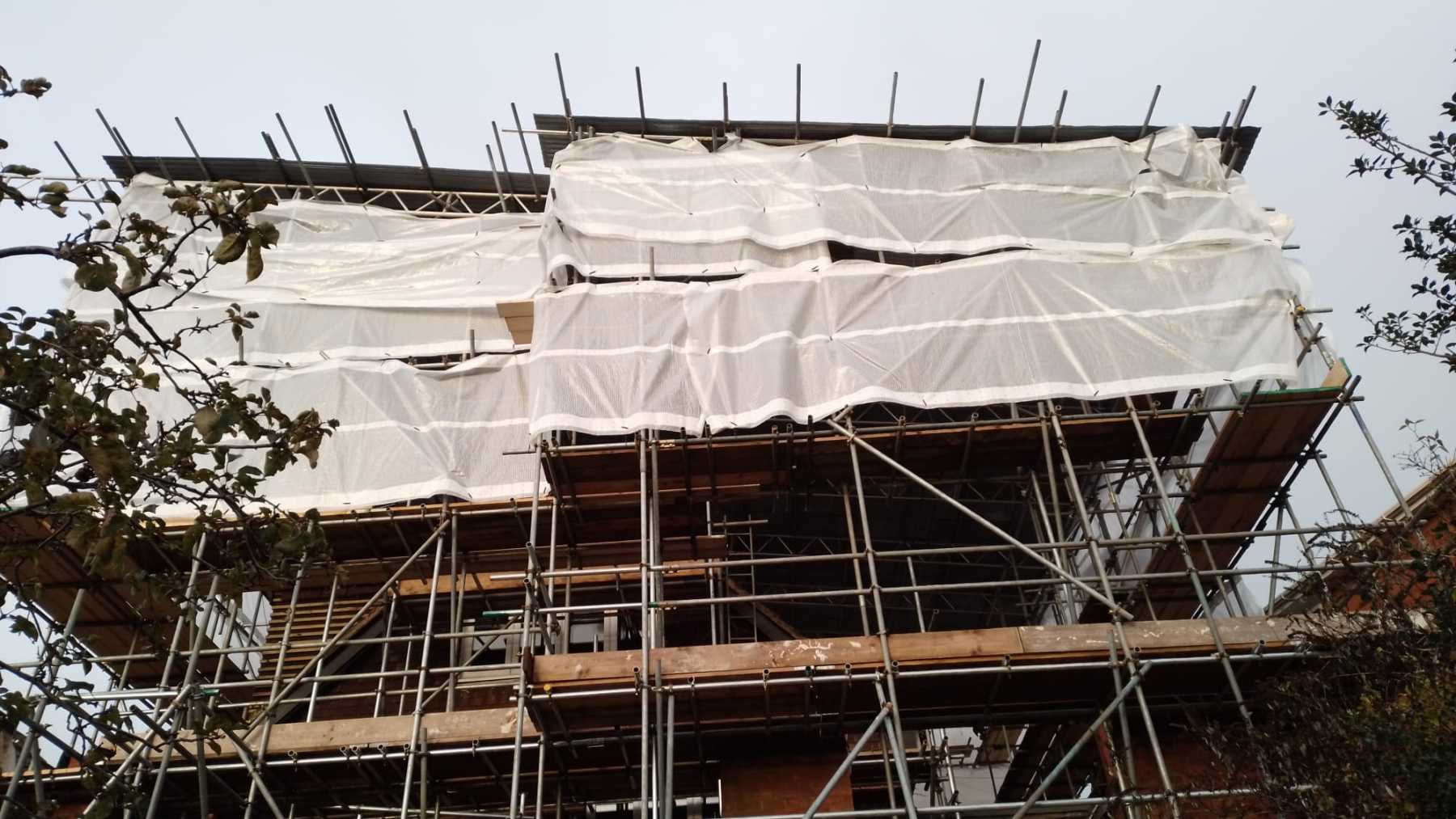
The History of Scaffolding: From Ancient Civilizations to Modern-Day
Scaffolding, as we know it today, plays a crucial role in the construction and maintenance ofbuildings, bridges, and other structures. It allows workers to reach high places safely,supporting both human labour and materials. But did you know that scaffolding has a longand fascinating history? From the ancient wonders of the world to modern skyscrapers,scaffolding has evolved over thousands of years.
In this blog, we’ll take a look at the history of scaffolding, tracing its development from earlycivilizations to the advanced systems used in construction today.
The Origins of Scaffolding: Ancient Civilizations
Scaffolding can be traced back to the earliest days of human construction. As soon aspeople began to build structures taller than their own reach, they needed a way to elevateworkers and materials safely.
Ancient Egypt
The first known use of scaffolding dates back to ancient Egypt, around 4,500 years ago,during the construction of the Great Pyramid of Giza. The Egyptians were skilled builders,and their monumental tombs and temples required the use of temporary structures tosupport workers and materials. It is believed that the Egyptians used ramps to move stoneblocks into place, and these ramps likely served as a form of scaffolding.The scaffolding used in ancient Egypt would have been rudimentary by today’s standards.Workers would have used simple wooden platforms or ladders to reach higher levels, muchlike the scaffolding systems in use today, but without the modular components or complexsafety features we now take for granted.
Ancient Greece and Rome
As architecture evolved, so did the use of scaffolding. In ancient Greece and Rome, thedemand for scaffolding grew with the construction of large temples, amphitheaters, andpublic buildings. The Greeks and Romans used wooden scaffolds made from simpleplanks and poles, but their innovations in engineering and construction made scaffoldingsystems more reliable and safer.Roman engineers were particularly skilled at designing scaffolds for large-scale projects likethe Colosseum and aqueducts. They used scaffolds to construct the upper levels ofamphitheaters, while also incorporating wooden platforms for workers to stand on. In manycases, these early scaffolds were simple ladder-like structures, and the wood used wasusually sourced from the nearby forests.
The Romans also developed a system of scaffolding with platforms, which allowedworkers to carry out complex tasks such as carving and placing decorative stonework.These platforms were often connected by rope systems, adding an element of stability tothe scaffolding structure.
The Middle Ages: Advancements in Building Techniques
During the Middle Ages, scaffolding continued to evolve, particularly in Europe. With the riseof cathedrals and castles, scaffolding became a more integral part of construction.
Gothic Cathedrals
The construction of Gothic cathedrals in the 12th through 16th centuries saw significantadvancements in scaffolding techniques. Builders needed to reach great heights to constructthe intricate designs of these monumental structures, including the towering spires, ribbedvaults, and flying buttresses.
Gothic builders used stone scaffolding for some of the highest points, alongside woodenscaffolds for the main body of the building. These stone scaffolds were often made bystacking blocks in a way that they formed a stable platform for workers to stand on. Thisallowed builders to work on high arches and vaulted ceilings.
Another notable advancement during this time was the use of cranes alongside scaffolding.The invention of the crane allowed builders to lift heavier materials, and it became a vitaltool in the construction of large structures like churches, castles, and bridges. Cranes wereoften integrated into scaffolding systems to help move heavy blocks and materials to higherlevels.
The Renaissance: The Birth of Modern Scaffolding
The Renaissance period (14th to 17th centuries) was a time of immense architecturalinnovation, particularly in Italy. Artists and architects like Leonardo da Vinci, Michelangelo,and Andrea Palladio not only advanced the field of architecture but also contributed to thedevelopment of scaffolding.
Leonardo da Vinci’s Contributions
Leonardo da Vinci, the famed polymath, sketched detailed designs for scaffolding and liftingmachines. One of his designs included a scaffolding system that incorporated both cranesand pulleys, allowing for a more efficient method of raising materials to great heights. Thesedesigns would lay the groundwork for many future developments in construction technology.
Michelangelo and the Sistine Chapel
Perhaps one of the most famous examples of scaffolding in Renaissance history isMichelangelo’s work on the Sistine Chapel in Vatican City. When he was commissioned topaint the chapel’s ceiling in 1508, there were no existing systems of scaffolding suitable forsuch a monumental task. To carry out his work, Michelangelo designed a specialscaffolding system that allowed him to work directly beneath the ceiling while beingsupported by a platform.
Michelangelo’s scaffolding was notable for being anchored to the walls of the chapel, with aseries of platforms that extended across the length of the ceiling. This system was one ofthe first of its kind to allow for the safe and stable positioning of workers at high altitudes.
The Industrial Revolution: Scaffolding Becomes a System
The Industrial Revolution (18th to 19th centuries) marked a major turning point in the historyof scaffolding. As buildings grew taller and more complex, the need for safer, more efficientscaffolding systems became urgent. Advances in manufacturing, particularly the massproduction of metal, allowed for stronger and more durable scaffolds.
Steel and Iron Scaffolding
By the 19th century, scaffolding began to incorporate metal—specifically steel andiron—replacing the traditional wood that had been used for thousands of years. This madescaffolding both sturdier and more versatile, capable of supporting greater loads and beingassembled in various configurations.
Modular scaffolding systems became widely used, with standard components such asframes, planks, and couplers that could be easily assembled and disassembled on-site.
This made scaffolding quicker and cheaper to construct, leading to its widespread adoptionin the booming urban centers of the industrialised world.
The Rise of High-Rise Construction
As cities grew taller, so did the need for scaffolding to support the construction ofskyscrapers and other large structures. In the early 20th century, the construction of high-rise buildings, such as the Empire State Building in New York City (completed in 1931),required new forms of scaffolding that could safely accommodate large teams of workers atgreat heights.
The Safety Revolution
With the rise of tall buildings and industrial construction, safety became an increasinglyimportant concern. In the early 20th century, safety standards for scaffolding began toemerge. In the United States, the Occupational Safety and Health Administration(OSHA) was founded in 1970, and it introduced regulations that set the standard forscaffolding safety, including the use of guardrails, safety harnesses, and secure platformstructures.
Modern Scaffolding: A High-Tech, Modular Future
Today, scaffolding is a highly sophisticated industry. The introduction of aluminumscaffolding and modular scaffolding systems has made the process of setting upscaffolds quicker, safer, and more efficient. Modern scaffolding systems are designed formaximum safety, with features like advanced locking mechanisms, guardrails, and non-slip platforms.
The future of scaffolding may also include smart scaffolding that incorporates technologysuch as sensors to monitor structural integrity, ensuring worker safety and reducing the riskof accidents.
Conclusion – A Journey of Innovation
From the ramps of ancient Egypt to the modular systems of today, scaffolding has comea long way in supporting human progress in construction and architecture. It has been acrucial part of building some of the world’s most iconic structures, and its evolution mirrorsthe growth of human civilization itself.As we look toward the future, scaffolding will continue to play an essential role in shaping theskylines of tomorrow, ensuring that workers can reach new heights with safety andefficiency.
For more information about the more modern services that A-Fix Scaffolding provide, contactus today.
